
When Deliveries Go Off Schedule: Building Better Communication Between Warehouse and Transport Teams
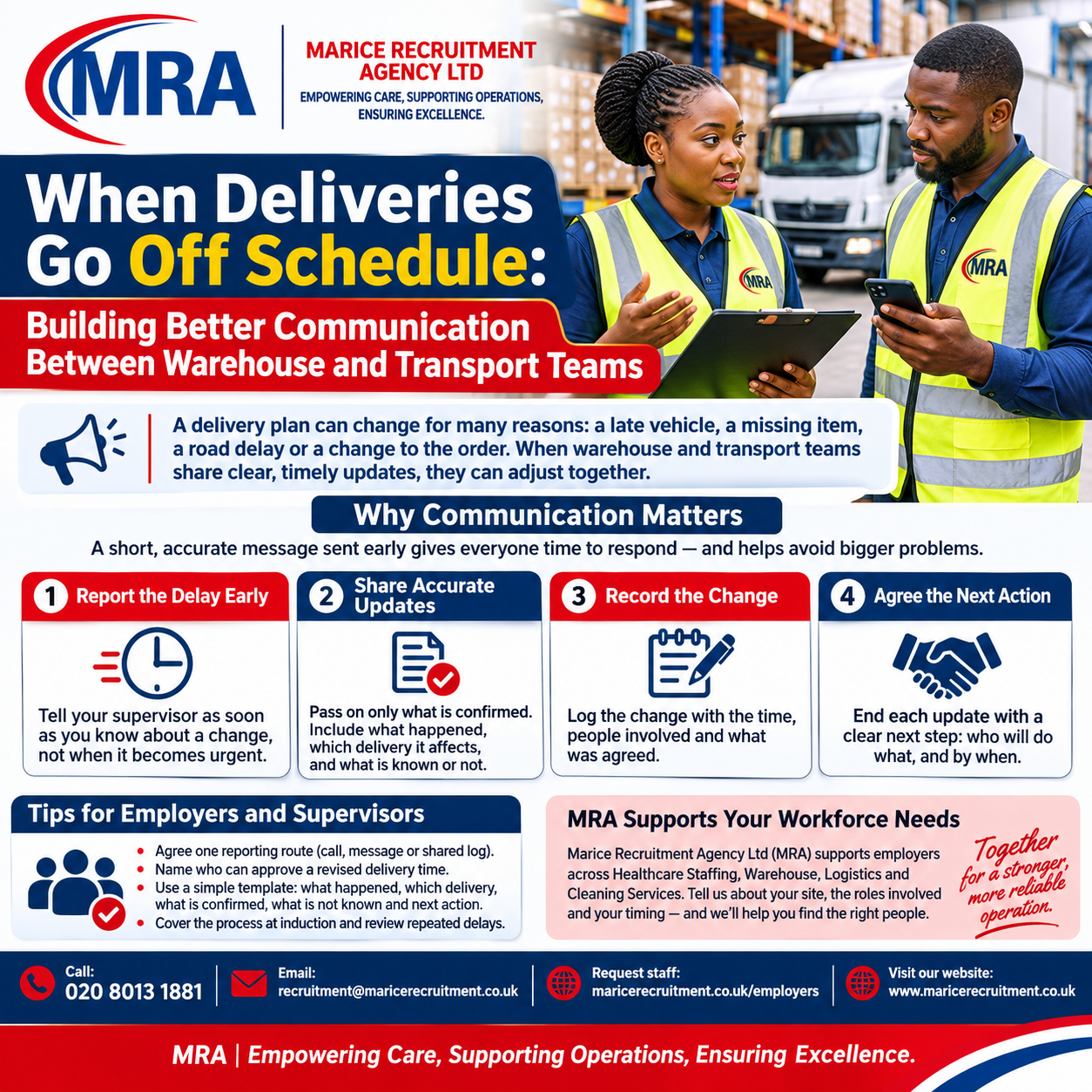
A delivery plan can change for many reasons: a late vehicle, a missing item, a road delay or a change to the order. The change itself is rarely the biggest problem. The bigger problem is when the people who need to know find out late, or hear different versions. When warehouse and transport teams share clear, timely updates, they can adjust together.
Why communication matters when plans change
Warehouse teams plan picking, loading and storage around vehicle times. Transport teams plan routes and drivers around when goods are ready. A change in one place affects the other, and often the customer too. A short, accurate message sent early gives everyone time to respond.
1. Report the delay early
Tell the appropriate supervisor as soon as you know about a change, not when it becomes urgent. Say what has happened, which delivery it affects and what you know so far. If you do not yet know the cause, say so.
2. Share accurate updates
Pass on only what has been confirmed. Do not guess a new delivery time or promise an outcome before the supervisor has agreed it. When new information arrives, update everyone who needs it, so that nobody is working from an old version. A useful update covers:
- What has happened.
- Which delivery or order it affects.
- What is confirmed and what is not yet known.
- Who has already been told.
3. Record the change
Log the change through your approved process, with the time, the people involved and what was agreed. A clear record helps the next shift pick up where you left off. It also makes patterns easier to see, such as a collection that is often late.
4. Agree the next action
End each update with a clear next step: who will do what, and by when. For example, the warehouse team may re-sequence loading while the transport team confirms the new slot with the supervisor. If the problem is bigger than your role, follow the escalation route instead of trying to solve it alone.
Tips for employers and supervisors
- Agree one way to report changes, whether a call, a message or a shared log, and make sure everyone knows it.
- Name who can approve a revised delivery time, and who may speak to customers.
- Use a simple template: what happened, which delivery, what is confirmed, what is not known and the next action.
- Cover the process at induction, including for temporary staff.
- Review repeated delays together, and look at the process before the person.
This article is general guidance. It does not replace your own procedures, systems, policies or legal requirements.
Talk to us
Marice Recruitment Agency Ltd (MRA) supports employers across Healthcare Staffing, Warehouse, Logistics and Cleaning Services. If you need warehouse or logistics staff, tell us about your site, the roles involved and your timing so that the conversation can start from what your operation needs. Scope, timing and terms are confirmed directly with us, and we cannot promise availability before we have discussed your requirements.
Call: 020 8013 1881 | Email: recruitment@maricerecruitment.co.uk | Request staff: maricerecruitment.co.uk/employers | Website: www.maricerecruitment.co.uk


Great communication makes all the difference! By sharing updates early, supporting one another and working as a team, warehouse and transport teams can overcome challenges and keep deliveries moving smoothly. Together, we make every delivery count.